

Estate Cleanout Checklist: Where to Start After a Loss
In the first days after a parent’s death, the only real job is securing the home and locating the will. Sorting, removing, and deciding what happens to everything inside can wait, and for legal reasons, it usually should. Acting too fast is the most common mistake families make, and it is often the hardest one to undo.
This matters because the instinct after a loss is to do something, anything, to feel useful. But a home full of belongings is not an emergency. Below is a simple estate cleanout checklist for the first week: what to secure, what to find, and how to know when it is genuinely safe to begin sorting.
Key Takeaways
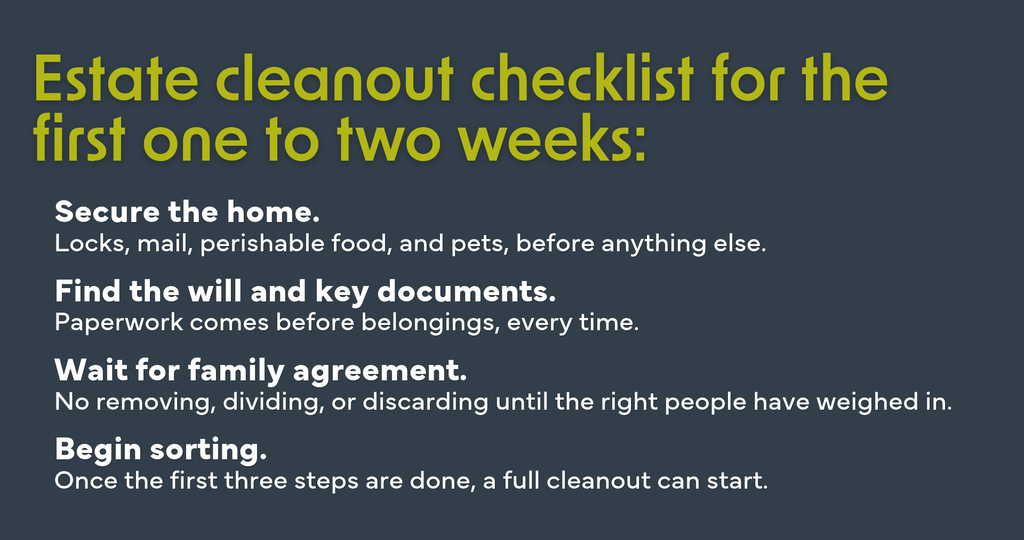
- Securing the home comes first: locks, mail, perishable food, and anyone who had a key should all be addressed before sorting begins.
- Locate the will and key documents before anything in the home is moved, distributed, or discarded.
- Belongings should not be removed or divided among family until everyone who has a say has had the chance to weigh in.
- Ohio law makes the estate’s executor responsible for taking possession of and conserving the deceased person’s property, which is a legal duty, not just a sentimental guideline.
- A full sort and clear typically takes two to three weeks once a family is ready to begin.
- This is a different starting point than a routine, planned home cleanout, which is why the sequence below exists.
Secure the Home Before Anything Else
Before anything else happens, the home itself needs to be secured. If there is any uncertainty about who has keys, such as a former caregiver, a neighbor, or an old roommate, change the locks. This is not about distrust. It is about protecting the estate’s assets while the family figures out next steps.
A few practical tasks matter in the first days:
- Handle perishable food so the house does not develop odors or pests while it sits empty.
- Forward or hold the mail through the post office so bills, statements, and important notices do not pile up unseen.
- Notify a neighbor or alarm company if the home will sit empty for stretches of time, so someone local knows to flag anything unusual.
- Check on pets immediately if your parent had any, since they cannot wait for the rest of the process to sort itself out.
None of this requires deciding what to do with the house long term. It is simply about making sure nothing is lost, damaged, or taken before the family has had a chance to think clearly.
Find the Will and Key Documents First

Once the home is secure, the next job is finding paperwork, not belongings. Look for the will, any funeral prearrangement documents, insurance policies, bank statements, and property deeds. These are usually kept together in a desk drawer, a filing cabinet, a safe, or sometimes a safe deposit box.
This step comes before sorting for a practical reason: the will often names an executor, the person legally responsible for managing the estate, and that person’s authority shapes everything that happens next. If your parent used an attorney for estate planning, that office may also have a copy of the will on file, which is worth a phone call if you cannot locate the original right away.
Take photos of any documents you find before moving them, just in case a sibling or the estate attorney asks where something turned up. It is a small step that prevents a lot of confusion later.
A few other documents are worth tracking down during this same pass through the house: recent bank and credit card statements, property tax records, car titles, and any outstanding bills. You do not need to open or act on any of it yet. Setting it aside in one place, even a single box or folder, saves hours of searching once the estate attorney or executor is ready to move forward.
Why Nothing Should Be Removed or Decided Yet
This is the part families most often get wrong, usually with good intentions. A sibling takes a piece of furniture home “just to keep it safe.” Someone donates a closet full of clothes to free up space. It feels productive, but it can create real problems, both legal and emotional.
Under Ohio law, the executor named in the will (or the administrator appointed by the court if there is no will) is responsible for taking possession of and conserving the estate’s property until it can be properly distributed. According to the Cuyahoga County Probate Court, this is one of the executor’s core legal duties, right alongside filing an inventory with the court and paying the estate’s debts. Removing or discarding items before that process has run its course can complicate the executor’s job and, in some cases, create disputes among heirs that did not need to happen.
The emotional risk is just as real. Once something is given away or thrown out, there is no undoing it. Families who wait even a short time before deciding what to do with the vintage dishes or the hand tools in the garage almost always make a calmer, more informed choice than families who rushed.
Waiting also protects relationships. Grief already puts pressure on siblings who may grieve differently, live at different distances, or hold different opinions about what their parent would have wanted. A short pause before anyone starts dividing belongings gives everyone a chance to be heard, which matters more in the long run than how quickly the house gets emptied.
What “Ready to Start” Actually Looks Like
So when is it actually safe to begin? In most cases, once the will has been located, the executor has been identified, and immediate family members have had a chance to discuss next steps, sorting can begin. You do not need to wait for probate to fully close. You do need to wait until the right people have agreed on how decisions will be made.
Once a family reaches that point, the process of preparing for a home cleanout looks different from the securing and documentation work described above. It involves sorting room by room, identifying items with resale or sentimental value, and deciding what gets kept, donated, sold, or discarded. A full sort and clear for a typical home runs two to three weeks once the work actually begins, though a single room or apartment can often be done in a day or two.
This timeline is worth knowing early, even before you are ready to start, because it helps set realistic expectations with an estate attorney, a realtor, or any siblings asking “how long is this going to take.”
FAQ
There is no fixed legal waiting period, but most families should wait until the will is located and the executor is identified before sorting or removing belongings. Securing the home (locks, mail, perishable food) can happen immediately. Full sorting is safest once the family agrees on how decisions will be made, which is often within the first one to two weeks.
You do not need an attorney to secure the home or locate documents. You should consult one before distributing or selling significant assets, especially if there is no will, if family members disagree, or if the estate includes real estate or high-value items. An estate attorney can clarify what Ohio law requires for your specific situation.
It depends on what was discarded. Lost financial or legal documents can usually be replaced through banks, insurers, or county offices, though it takes time. Lost personal belongings cannot be replaced, which is exactly why this guide recommends locating paperwork and reaching family agreement before anyone starts removing items from the home.
Generally, no, not without the executor’s agreement. The executor is legally responsible for conserving estate property until it is properly distributed. Informal removal of items, even small or sentimental ones, can create confusion or conflict later. A short conversation with the executor before taking anything prevents most problems before they start.
You Do Not Have to Figure This Out Alone
The first week after a parent’s death is not the time to have answers about the house. It is the time to secure what is there, find the paperwork, and give the family room to agree on next steps before anything is moved. Once you reach that point, Downsize & Thrive can walk you through what to expect from a home cleanout service, with one team handling the sorting, donating, and hauling so your family does not have to manage it alone. Call 216-218-9475 whenever you are ready to talk, with no pressure to have it all figured out first.