
Home Organization for Busy Professional Families
The most useful home organization for busy professional families rests on three things: a family command center that handles shared logistics, day-to-day systems sized to the time you actually have, and, if part of your week is remote or hybrid, a home office that doesn’t compete with the rest of the house for space. Running a household on top of a demanding job means the real bottleneck usually isn’t motivation. It’s time, and whatever mental energy is left by the end of a long day.
Building a command center, setting up day-to-day systems that hold up under a busy schedule, and having a home office plan for the days you’re working from home will make everything run smoother. It is also important to know where professional help fits in if the whole project feels like more than you have room for right now.
Key Takeaways
- A family command center, one spot for mail, bills, schedules, and forms, cuts down the daily coordination that eats into limited free time.
- Day-to-day systems for busy households work best sized to the time you actually have, not an idealized weekend project.
- Roughly 1 in 4 workers with a bachelor’s degree or higher were working from home at least part of the week in early 2024, so a home office plan matters for some households, not all.
- A home office, when you need one, works best with clear boundaries and separation from household paperwork.
- Small, frequent decisions, not a lack of information, are usually what stalls organizing projects in busy households.
- Professional organizing support can step in at any point, from one space to an ongoing plan, when a project outgrows the time a household has for it.
Why Busy Professional Households Need a Different Approach
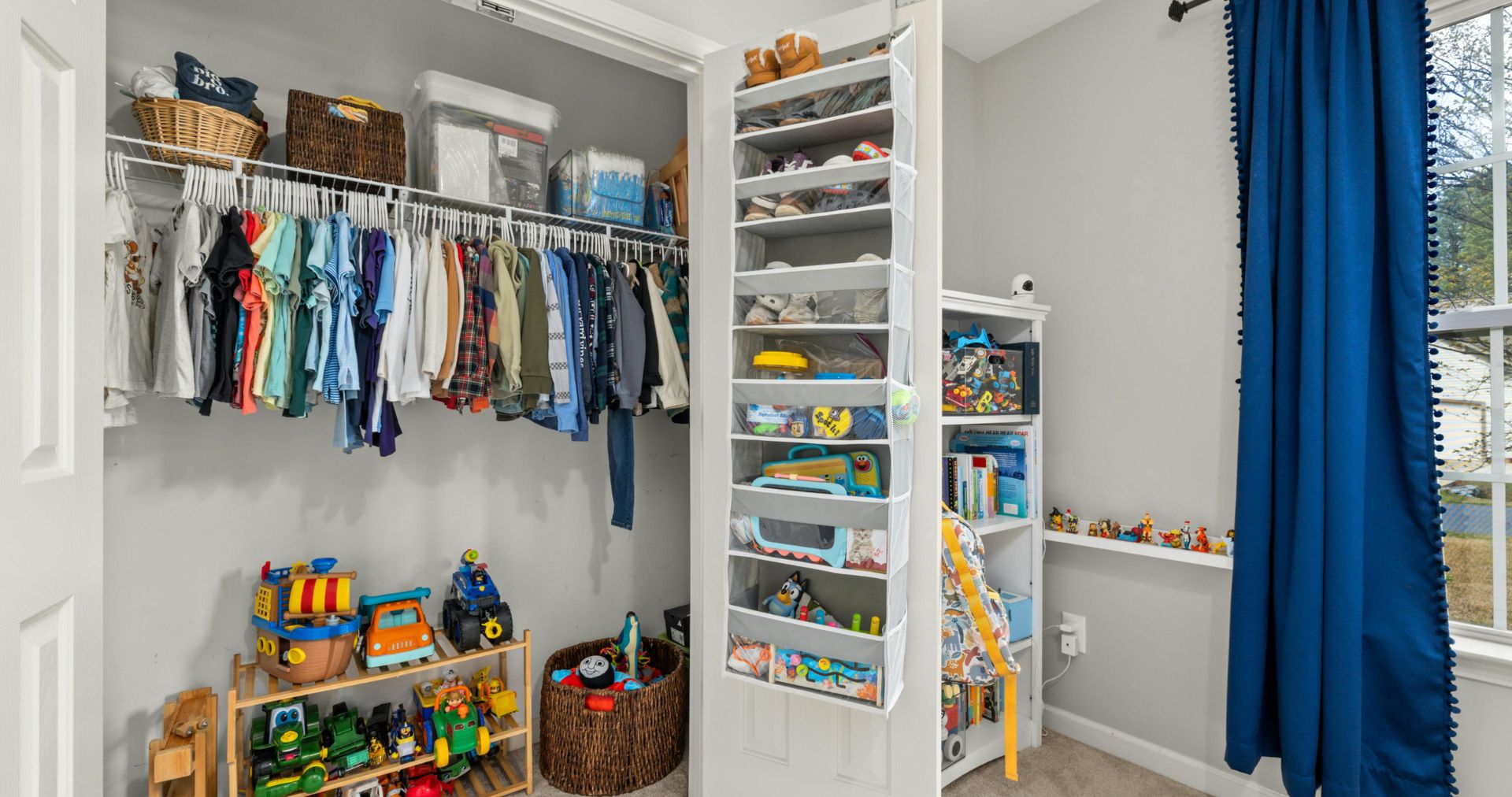
Most organizing content assumes one of two households: a family with young kids and a lot of toys, or someone with a free weekend and an empty calendar. Neither describes a household where both adults work full time, evenings are booked with kids’ activities, and weekends disappear before you notice.
If that sounds familiar, the bottleneck usually isn’t knowing what to do. It’s finding the hours and the mental bandwidth to do it. Downsize & Thrive’s professional organization services for families cover a lot of the kid-focused ground already: entryway systems, toy rotation, school paperwork. This guide is about running the rest of the household, the parts that fall on the adults.
Build a Family Command Center First
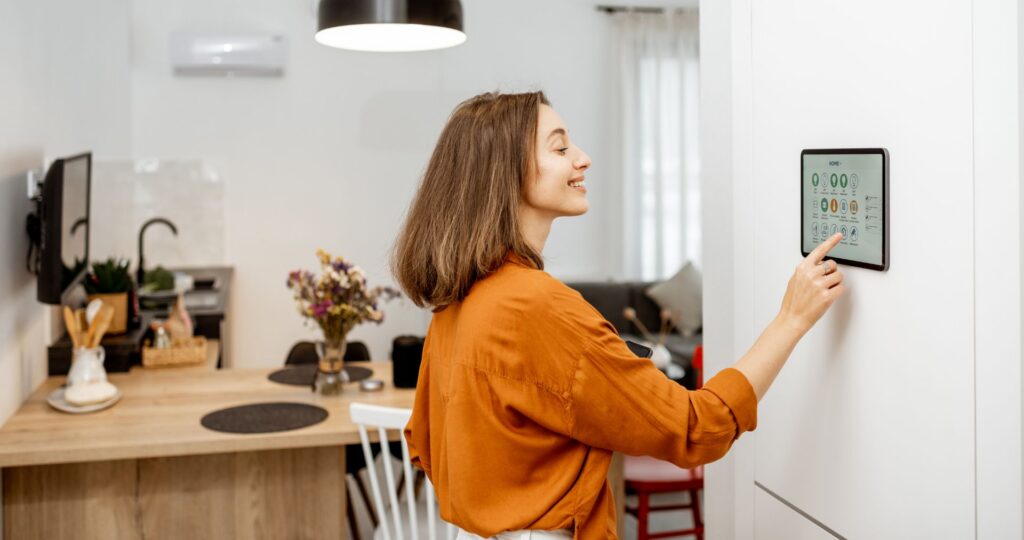
A family command center is one physical spot where the logistics of running a household actually live: mail, bills, permission slips, a shared calendar, and whatever has to leave the house with someone the next morning.
A working command center usually needs:
- An incoming mail tray so mail doesn’t scatter across three different surfaces
- A labeled folder system for sign, pay, file, and shred, so nothing gets missed or re-read five times
- A shared calendar, wall-mounted or digital, that everyone actually checks
- A landing zone by the door for keys, bags, and anything that needs to go out tomorrow
Put it somewhere the household already passes through daily: a kitchen counter, a hallway, a mudroom. A spare room no one walks into won’t get used.
If you already know this needs to exist but haven’t had a free weekend to build it, that’s exactly the kind of project a professional organizer like Downsize & Thrive can set up in a single visit, while you make the calls about where things should go.
Day-to-Day Systems That Actually Hold Up
The rest of the house- kitchens, closets, laundry- needs systems built around the time you actually have, not the time you wish you had. A “clear it all out this weekend” plan sounds great and rarely survives contact with an actual weekend.
What tends to hold up instead:
- Short, frequent resets (10 minutes, most nights) instead of one big overhaul
- Decision rules made in advance, so you’re not re-deciding the same question every day
- A donation box that actually leaves the house on a set schedule, not “eventually”
None of this requires perfection. It requires systems that survive a normal week, including the weeks that don’t go as planned.
If Part of Your Week Is Remote, Set Up a Home Office That Works
If your job is fully in-office, this section may not apply to you, and that’s fine. But it’s worth knowing this isn’t a small group: roughly 1 in 4 workers were working from home at least part of the week in early 2024, according to the U.S. Bureau of Labor Statistics.
For that group, a home office isn’t an extra room. It’s shared square footage in a house that’s already busy, and it needs its own boundaries to work well.
A functional home office in a shared house usually needs three things:
- A closing boundary: a door, or a cart that rolls out of sight at day’s end, so work equipment doesn’t creep into family space
- A home for cables and chargers: otherwise that drawer turns into a tangle within a week
- Separation from household paperwork: so a signed work contract doesn’t end up under a stack of school forms
When It’s Time to Bring in Help

There’s a point where a household knows it needs to get organized but keeps pushing the project to “someday.” A few signs that point is here: the project touches more than one room, the decisions about what to keep feel harder than they should because you’re simply tired, or you’ve started and stopped more than once already.
None of that means something is wrong with how you’re managing things. It usually just means the project has outgrown the time a busy household has to give it.
Getting help follows the same organizing process for any project: a conversation about your actual routine, hands-on sorting and setup, and follow-up as things settle in. There’s no single fixed package. Some households need one focused visit to build a command center or reset a room. Others do better with occasional check-ins as routines shift. Downsize & Thrive builds the plan around the household, not the other way around.
Frequently Asked Questions
What is a family command center, and where should it go?
A family command center is one central spot for the logistics that keep a household running: mail, bills, forms, a shared calendar, and a landing zone for things that need to leave the house. It works best somewhere the household already passes through daily, like a kitchen counter or hallway, not a room that gets used once a week.
Do I need a home office setup if I only work from home one or two days a week?
It depends on how much that space competes with the rest of your home. If a laptop on the kitchen table works fine for one or two days, you may not need a dedicated setup. If work materials are spilling into family space or getting mixed with household paperwork, a small, defined home office area still helps, even for a partial week.
How is a professional organizer different from just buying more storage bins?
Storage bins hold things. A professional organizer builds a system for where things go, why they go there, and how the household actually uses the space, then handles the physical sorting and setup. Bins without a system behind them tend to just become new places to lose track of things.
When does it make sense to call in help instead of doing this myself?
It usually makes sense once the project takes more time or more rooms than your schedule can absorb, or once you’ve started and stalled more than once. That’s not a sign anything is wrong with you. It’s a sign the project is bigger than the time a busy household has to give it right now.
The Goal Is Systems That Keep Working After the Project Ends
A command center that actually gets used, day-to-day systems that survive a real week, and a home office plan if you need one: none of this requires a complete overhaul of how your household runs. It requires systems built around the time you actually have, not the time you wish you had.
If any part of this feels like more than your schedule can absorb right now, we can talk through what a plan built around your household could look like. Reach out at 216-218-9475 or contact us online, or see our home organization services for more on how the process works.