
Home Safety Assessment Checklist: Room by Room
A home safety assessment is a walkthrough of a home, room by room, to flag what could become a safety problem and turn it into a short, manageable list. It is not a medical exam, and it does not evaluate a person’s health. It looks at the space someone lives in, not the person living in it.
Families usually request one after a fall, a near-fall, or if a relative’s safety in their home has become a concern. Use this as a plain-language home safety assessment checklist for what actually happens, not just what to look for: who typically asks for one, what happens during the visit, what you get afterward, and how the results connect to the bigger question many families are already facing, whether a home still works or whether it is time to start planning something different.
Key Takeaways
- A home safety assessment evaluates the home environment, not a person’s medical or cognitive health.
- It typically covers entryways, stairs, bathrooms, kitchens, and lighting throughout the house.
- Findings come back as a short, prioritized list rather than an overwhelming inventory of every possible fix.
- Families often request one after a fall, a near-fall, or a parent mentioning they feel less steady than they used to.
- The results point in one of two directions: changes that let the current home keep working, or a signal that it may be time to consider a move.
- The visit typically takes one appointment and requires no special preparation from the senior beforehand.
Who Usually Requests a Home Safety Assessment?
Two kinds of people usually make the call. The first is an adult child who lives at a distance and cannot see day-to-day how a parent is managing. A fall, even a minor one, often turns quiet worry into action. The second is the senior themselves, someone who wants a second, more objective set of eyes before deciding anything about their living situation.
Neither group needs to have already decided to make any changes. An assessment is a way to get real information first. Falls among older adults are common enough that requesting a home safety assessment is not an overreaction. It is a reasonable step in deciding what the most secure living situation is during a new season of life.
There is also a third reason families reach out: the home simply feels different than it used to. A staircase that was never a problem starts to feel steep. A bathroom that worked fine for decades suddenly feels risky on a wet morning. None of that means something is wrong with the person living there. It usually just means the home has not kept pace with how a body changes over time, and a fresh set of eyes can spot exactly where that gap has opened up.
What Happens During a Home Safety Assessment?
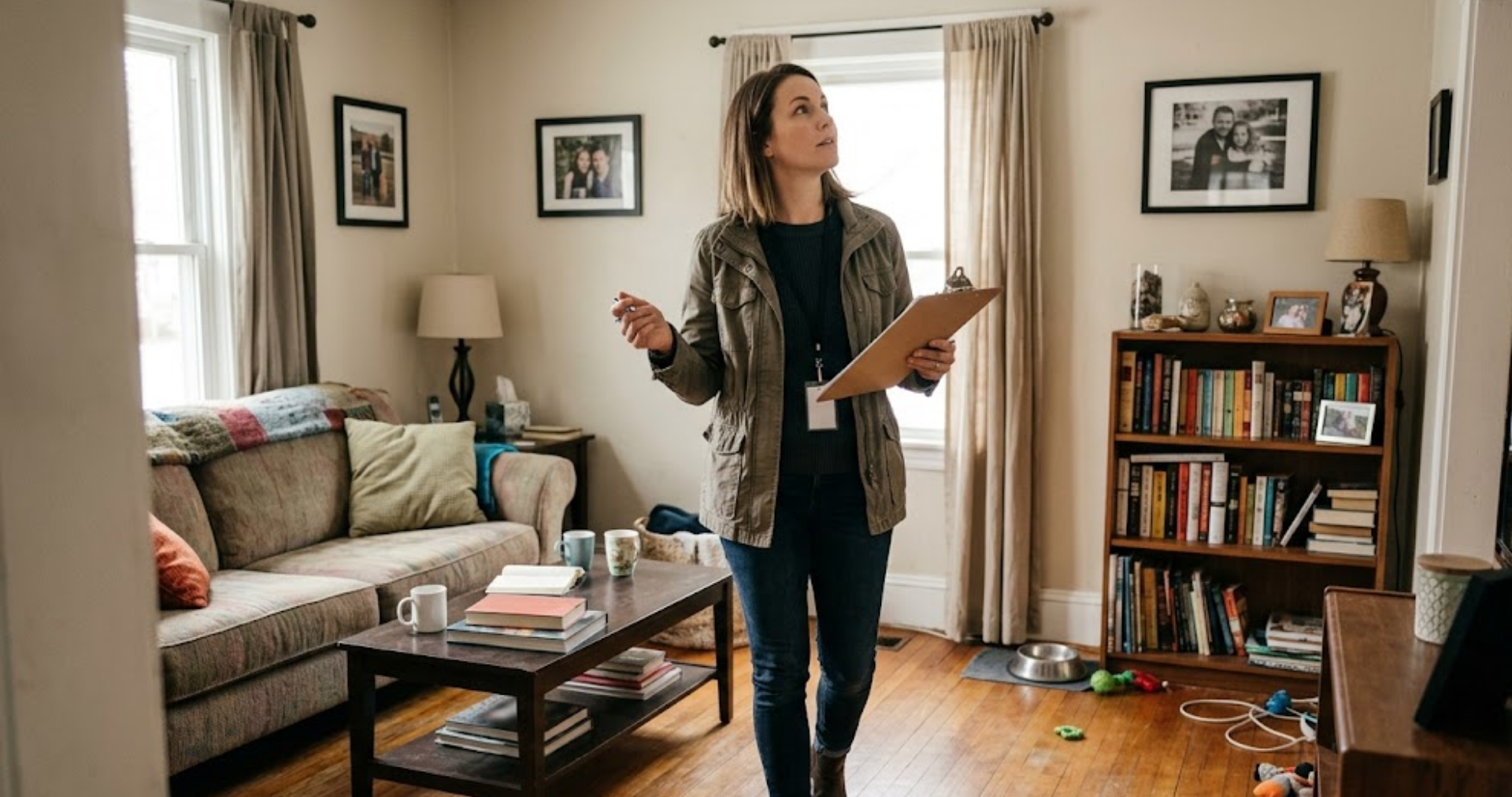
During the visit, someone walks through the home with the resident, focusing on the areas where most safety issues develop. This usually includes:
- Entry points and steps, including whether railings exist and whether lighting is adequate after dark.
- Stairs and hallways throughout the home, checking for secure railings, clear pathways, and trip hazards like loose rugs or cords.
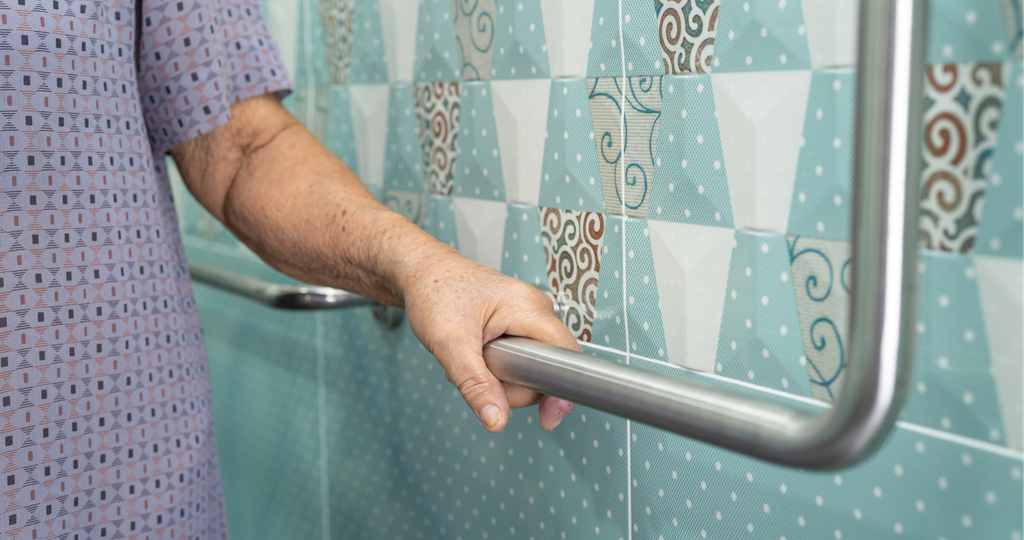
- Bathrooms, typically the highest-risk room in the house, looking at tub and shower surfaces, grab bar placement, and toilet height.
- Kitchens, including whether frequently used items are within easy reach and whether the stove and counters are safe to use comfortably.
- Lighting throughout the home, since dim hallways and staircases are one of the most common, and most fixable, hazards.
The visit does not require the senior to do anything to prepare beforehand. There is no test to pass. It is simply an honest look at the space as it exists today.
Most visits take an hour or two, depending on the size of the home, and the person conducting the assessment will usually ask a few questions along the way: how often certain stairs get used, whether laundry is on a different floor than the bedroom, whether anyone has had a close call recently. Those questions are not a test either. They help connect what the eye sees in each room to how the home is actually used day to day, which is what separates a useful assessment from a generic checklist.
Home Safety Assessment Checklist: Room by Room
Entryway & Steps
- Handrails on both sides of any steps
- Even, unbroken step height
- Outdoor lighting at the entry
- No loose mats or uneven thresholds
Hallways & Stairs
- Secure, graspable railings on all stairs
- Clear, uncluttered pathways
- No loose rugs or exposed cords
- Light switches at both the top and bottom of stairs
Bathroom
- Grab bar near the toilet
- Grab bar in the shower or tub
- Non-slip mat or strips in the tub/shower
- Comfortable toilet height (or riser installed)
- Nightlight for after-dark trips
Kitchen
- Frequently used items stored within easy reach
- Stable step stool available if higher items are needed
- Stove and counters clear and safe to use
- Adequate lighting over work areas
Bedroom
- Clear, unobstructed path from bed to bathroom
- Lamp or light switch reachable from bed
- Phone or call device within arm’s reach
Living Areas
- Clear walkways between furniture
- Electrical cords secured and out of walking paths
- Sturdy furniture available for support while walking
Lighting (Whole Home)
- No dark transition zones between rooms
- Working bulbs in every fixture
- Nightlights in high-traffic nighttime paths
What Do You Get After a Home Safety Assessment?
After the walkthrough, you do not receive a long document listing every theoretical risk in the house. That kind of list is overwhelming and rarely gets acted on. Instead, you get a short, prioritized set of recommendations, starting with what matters most for safety right now.
Some recommendations are simple and inexpensive, like adding a grab bar or improving a light fixture. Others point toward a bigger project, like widening a doorway or making specific modifications that help someone move through their home more independently. The goal is always a clear next step, not a wall of work that feels impossible to start.
How This Connects to the Aging-in-Place-or-Downsize Decision
A home safety assessment often answers a bigger question than “what needs fixing.” Sometimes the findings suggest the current home can keep working well with a handful of changes. Other times, the assessment reveals something harder to hear: too many stairs, a layout that fights against mobility, or a scope of needed changes that goes well beyond a weekend project.
Neither outcome is a failure. It is simply information. If you are already weighing whether staying put or downsizing to somewhere smaller makes more sense for your family, an assessment gives you something concrete to base that decision on, instead of guessing.
This is often the real value of an assessment, and it gets overlooked. Families sometimes delay the aging-in-place-or-downsize conversation for months or years because it feels too big and too abstract to start. A short, specific list of findings turns that abstract worry into something you can talk through together: three fixes that solve most of the risk, or a clear picture of what would need to change for the home to keep working long term.
FAQ
A home safety assessment checks the physical layout and condition of a home, including entryways, stairs, bathrooms, kitchens, and lighting. It looks for fall risks, accessibility issues, and areas where simple changes could make daily movement through the home safer. It does not evaluate a person’s medical condition or cognitive status.
Costs vary depending on who performs the assessment and what it includes. Some are offered at no cost as part of a broader consultation, while others carry a fee tied to a more detailed report. Ask upfront what is included and whether the assessment comes with follow-up recommendations or referrals.
No. A home safety assessment looks at the living space itself, not a person’s physical or cognitive health. A medical or clinical evaluation, typically performed by a nurse or occupational therapist, assesses the individual. The two can complement each other, but they answer different questions and are usually performed by different kinds of professionals.
Most home safety assessments take a single visit, often an hour or two depending on the size of the home. There is nothing for the resident to prepare beforehand. The assessor walks through the home, asks a few questions about daily routines, and typically provides findings and recommendations soon after the visit.
Foresight, Not a Failure
Requesting a home safety assessment is not a sign that anything has gone wrong. It is simply a way to make an informed decision about the safest living situation for yourself or your family member.
Whether the result is a short list of fixes or a conversation about what comes next, Downsize & Thrive can help your family figure out what fits, with no pressure either way. Call 216-218-9475 to start the conversation whenever you are ready.